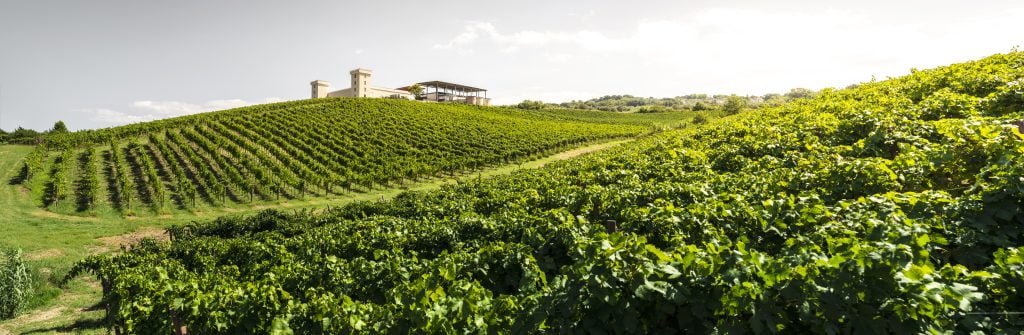

Winemaking regions in Romania
There are over 500 registered wine producers in Romania, and their list is available below.
BANAT
The Banat wine region is located in the western and southwestern part of Romania and stretches across the counties of Caraș-Severin, Timiș, and Arad (the area south of the Mureș River). The term “banat” referred to a frontier province administered by a “ban”. The historical province of Banat is now divided between Romania, Serbia, and Hungary.
Historically, Banat has been inhabited for centuries by Romanians, Serbs, Hungarians, and Swabians, alongside Turks and Austrians, which has left a significant mark on the local culinary heritage.
The capital of Banat, Timișoara, has been ranked in recent years among the best cities for business, is the only city in Eastern Europe with an AAA investment grade (Fitch Ratings), has been declared the best city in Romania and the third in Europe for remote work, and in 2023 was named the best city for a city break in Europe.
The Banat Wine Region includes:
– Protected Designations of Origin (PDO): PDO Recaș and PDO Banat (with the sub-regions Moldova Nouă, Dealurile Tirolului, and Silagiu).
– Protected Geographical Indications (PGI / IGP): PGI Viile Timișului, PGI Viile Carașului.
Main white grape varieties: Muscat Ottonel, Sauvignon, Pinot Gris, Fetească Regală, Fetească Albă, Italian Riesling, Rhine Riesling, Chardonnay.
Main red grape varieties: Cabernet Sauvignon, Merlot, Pinot Noir, Fetească Neagră, Burgund Mare, Cadarcă, Syrah, Novac.

Agape, Art & Nature
Crama Aramic
Crama Thesaurus
Cramele Recas
Crama Varvara
Valeaeden
Dealul Dorului Winery
Crama Rykas
Domeniile Sera
Domeniile Sescu
Ratska Wines
Crama Villa Zamer
CRISANA & MARAMURES
The Crișana and Maramureș wine region is located in the northwest of Romania and extends across the counties of Satu Mare, Sălaj, Bihor, and Arad (north of the Mureș River). Crișana is famous for its wine cellars, manually carved into the hills, sometimes overlapping on two or three levels, especially in the Beltiug-Rătești area. The tradition of quality wines has been revitalized over the past 20 years, and the region has become known for its large number of small producers.
Crișana – a historical province of Romania – was part of the region known as Partium, along with Maramureș and Sătmar. The name Partium meant “the parts” of Hungary that, after 1526, were joined with the historical core of the Transylvanian Plateau, together forming the Principality of Transylvania. In this context, the wines produced in this area became favorites at the tables of the Austro-Hungarian Imperial Court.
Main white grape varieties: Muscat Ottonel, Sauvignon, Traminer Rosé, Pinot Gris, Fetească Regală, Fetească Albă, Italian Riesling, Rhine Riesling, Chardonnay, Mustoasă de Măderat, Furmint.
Main red grape varieties: Cabernet Sauvignon, Merlot, Pinot Noir, Fetească Neagră, Burgund Mare, Syrah, Cadarcă, Cabernet Franc.
The Crișana and Maramureș Wine Region includes:
– Protected Designations of Origin (PDO / DOP): PDO Crișana (with the sub-regions Biharia, Șimleu Silvaniei, and Diosig), PDO Miniș.
– Protected Geographical Indications (PGI / IGP): PGI Dealurile Sătmarului, PGI Dealurile Crișanei, I.G.P. Dealurile Zarandului.

Agriviebor SRL
Agro Inter Trade SRL
Agro Vitis Vinifera SRL
Anca Ioan Mihail
Artisan Winery
Blaga Dumitru
C & G Art Food
Cenalosvada
Crama Agaston
Crama Andronic
Crama Ardud
Crama Balla Geza
Crama Carastelec
Crama Crucea Alba
Crama Daiconi
Crama del Duca
DOBROGEA
The encompassing Dobrogea, the Danube’s Sands and Danube Terrace, lies in southeastern Romania, stretching between the Danube River and the Black Sea, and bordered by the Măcin Mountains. With its plateaus and alluvial hills, Dobrogea is a treasure trove of microclimates, which explains the multitude of appellations that define the particularities of each geographical indication.
The winemaking tradition in this area dates back at least 2,700 years, with Greek colonists among the first to cultivate vines in Dobrogea.
Historical records show that between 1760 and 1770, Polish merchants came to buy Dobrogean wine and transported it along the Danube using ships loaded at Isaccea. According to a 1903 report, the northern Dobrogea region alone held 5,800 hectares of vineyards (Sarica-Niculițel Vineyard) and produced around 305,000 hectoliters of wine annually.
The Dobrogea Wine Region includes:
– Protected Designations of Origin (PDO / DOP): PDO Adamclisi, PDO Babadag, PDO Murfatlar, PDO Oltina, PDO Sarica Niculițel, PDO Însurăței
– Protected Geographical Indications (PGI / IGP): PGI Colinele Dobrogei, PGI Terasele Dunării
Main white grape varieties: Chardonnay, Pinot Gris, Muscat Ottonel, Sauvignon, Italian Riesling, Rhein Riesling, Fetească Regală, Fetească Albă, Tămâioasă Românească, Traminer Rosé, Crâmpoșie Selecționată, Băbească Gri, Aligoté, Viognier.
Main red grape varieties: Cabernet Sauvignon, Merlot, Pinot Noir, Fetească Neagră, Syrah, Băbească Neagră, Petit Verdot.

Crama La Sapata
Domeniile Adamclisi
Domeniile Mitroi
MOLDOVA
Moldova is the largest wine region in Romania and one of the most extensive in Europe. Its nine vineyards and eight independent viticultural centers occupy a predominantly hilly area stretching between the Moldavian Subcarpathians, the Carpathian curvature, and the valleys of the Prut and Siret rivers.
The winemaking tradition here is extremely old, as evidenced by the rich treasury of local grape varieties. Among other things, Moldova is considered the birthplace of Romania’s flagship grape variety, Fetească Neagră. The sweet wines produced in this region were exported as early as the Middle Ages and were among the favorites of Dutch nobles living in South Africa.
The vineyards of Moldova produce everything from still and sparkling wines to vinars (Romanian brandy), and the region is home to Romania’s oldest collection of aged wine distillates – some over 40 years old.
The Moldova Wine Region includes:
– Protected Designations of Origin (PDO / DOP): PDO Bohotin, PDO Iași, PDO Strunga, PDO Cotnari, PDO Dealu Bujorului, PDO Huși, PDO Iana, PDO Odobești, PDO Nicorești, PDO Panciu.
– Protected Geographical Indications (PGI / IGP): PGI Dealurile Moldovei, PGI Dealurile Vrancei.
Main white grape varieties: Aligoté, Fetească albă, Fetească regală, Frâncușă, Galbenă de Odobești, Grasă de Cotnari, Muscat Ottonel, Pinot gris, Plăvaie, Riesling de Rhin, Riesling italian, Sauvignon blanc, Șarbă, Tămâioasă românească, Traminer alb, Traminer roz.
Main red grape varieties: Băbească neagră, Cabernet franc, Cabernet Sauvignon, Fetească neagră, Merlot, Pinot noir, Syrah.

MUNTENIA
The winegrowing area of Muntenia covers the hilly zones of the Getic Subcarpathians and the Curvature Subcarpathians, with gentler, sun-exposed slopes that run along rivers rising in the mountains or crossing the Carpathians: Olt, Argeș, Dâmbovița, Prahova, and Buzău.
The Dealu Mare area is – and will continue to be, for the foreseeable future – the epicenter of quality wine in Romania, with the highest concentration of small, medium, and large producers focused on premium wines.
The winemaking tradition here is very old, although documentary records begin only in the 14th–15th centuries. At the beginning of the 18th century, the Dealu Mare region was exporting wine to Transylvania and counted among the favorites of Prince Rákóczi. Using wines produced here—in Valea Călugărească, Bucov, and Chițorani—the first Romanian sparkling wines were made in Azuga by Rhein & Cie.
The Muntenia Wine Region includes:
Protected Designations of Origin (PDO / DOP): D.O.P. Dealu Mare (with the sub-regions Boldești, Valea Călugărească, Urlați, Ceptura, Tohani, Breaza, Merei, Zorești), D.O.P. Pietroasa, D.O.P. Ștefănești.
Protected Geographical Indications (PGI / IGP): I.G.P. Dealurile Munteniei.
Main white grape varieties: Chardonnay, Crâmpoșie Selecționată, Fetească Albă, Fetească Regală, Muscat Ottonel, Pinot Blanc, Pinot Gris, Italian Riesling, Sauvignon Blanc, Tămâioasă Românească, Traminer Rosé, Aligoté.
Main red grape varieties: Băbească Neagră, Cabernet Franc, Cabernet Sauvignon, Fetească Neagră, Merlot, Petit Verdot, Pinot Noir, Sangiovese, Syrah.

Ferma Cu Migdali
OLTENIA
Stretching north of the Danube and across much of southern Romania, Oltenia is best known for its red wines, produced from the foothills of the Southern Carpathians in Drăgășani, through the central southern area of Segarcea, and westward to Mehedinți.
Known for its “island-like” vineyards — some located close to historic trading towns — Oltenia preserves, alongside a wide range of national and international varieties, a reserve of ancient Romanian grapes (Roșioara Verde, Roșioara Comună, Roșioara Neagră, Mustoasă de Măderat, Băbească Neagră, Negru Moale, Negru Vârtos, Gordan). These varieties survived the phylloxera epidemic thanks to their adaptability to sandy soils, where the pest cannot migrate from one root to another.
The Oltenia Wine Region includes:
– Protected Designations of Origin (PDO / DOP): PDO Drăgășani, PDO Sâmburești, PDO Banu Mărăcine, PDO Segarcea, PDO Mehedinți (with the sub-regions Severin, Corcova, Golul Drîncei, Vânju Mare, Orevița).
– Protected Geographical Indications (PGI / IGP): PGI Dealurile Olteniei.
Main white grape varieties: Crâmpoșie Selecționată, Fetească Albă, Fetească Regală, Muscat Ottonel, Pinot Gris, Rhein Riesling, Italian Riesling, Sauvignon, Tămâioasă Românească, Tămâioasă Roză, Ugni Blanc, Viognier.
Main red grape varieties: Alutus, Cabernet Franc, Cabernet Sauvignon, Dornfelder, Fetească Neagră, Marselan, Merlot, Negru de Drăgășani, Novac, Pinot Noir, Syrah, Touriga Nacional.

TRANSILVANIA
Some of the earliest attestations of ancient local viticulture in Romania are found in Transylvania – a region mentioned as a wine-producing area as early as Herodotus. During the Saxon colonization in the 13th century, the region was named “Weinland”, meaning the land of wine.
The Transylvanian Plateau Wine Region was long known as an area dedicated to producing remarkable white wines. However, climate changes in recent decades have also favored the creation of exceptionally expressive red wines.
Transylvania is also the region with the highest density of castles, manors, and fortifications – from Brașov, Sibiu, and Sighișoara to Cetatea de Baltă, restored and opened to tourism by Jidvei, one of Romania’s largest wine producers.
The Transylvania Wine Region includes:
– Protected Designations of Origin (PDO / DOP): PDO Aiud, PDO Alba Iulia, PDO Sebeș-Apold, PDO Lechința, PDO Jidvei, PDO Târnave (with the sub-regions Blaj, Mediaș, Târnăveni, Zăgar, and Valea Nirajului).
– Protected Geographical Indications (PGI / IGP): PGI Dealurile Transilvaniei.
Main white grape varieties: Chardonnay, Fetească albă, Fetească regală, Furmint, Iordană, Kerner, Muscat Ottonel, Neuburger, Petit Manseng, Pinot gris, Riesling de Rhin, Riesling italian, Sauvignon blanc, Traminer roz.
Main red grape varieties: Cabernet Sauvignon, Feteasca neagra, Merlot, Pinot noir, Syrah, Zweigelt.