
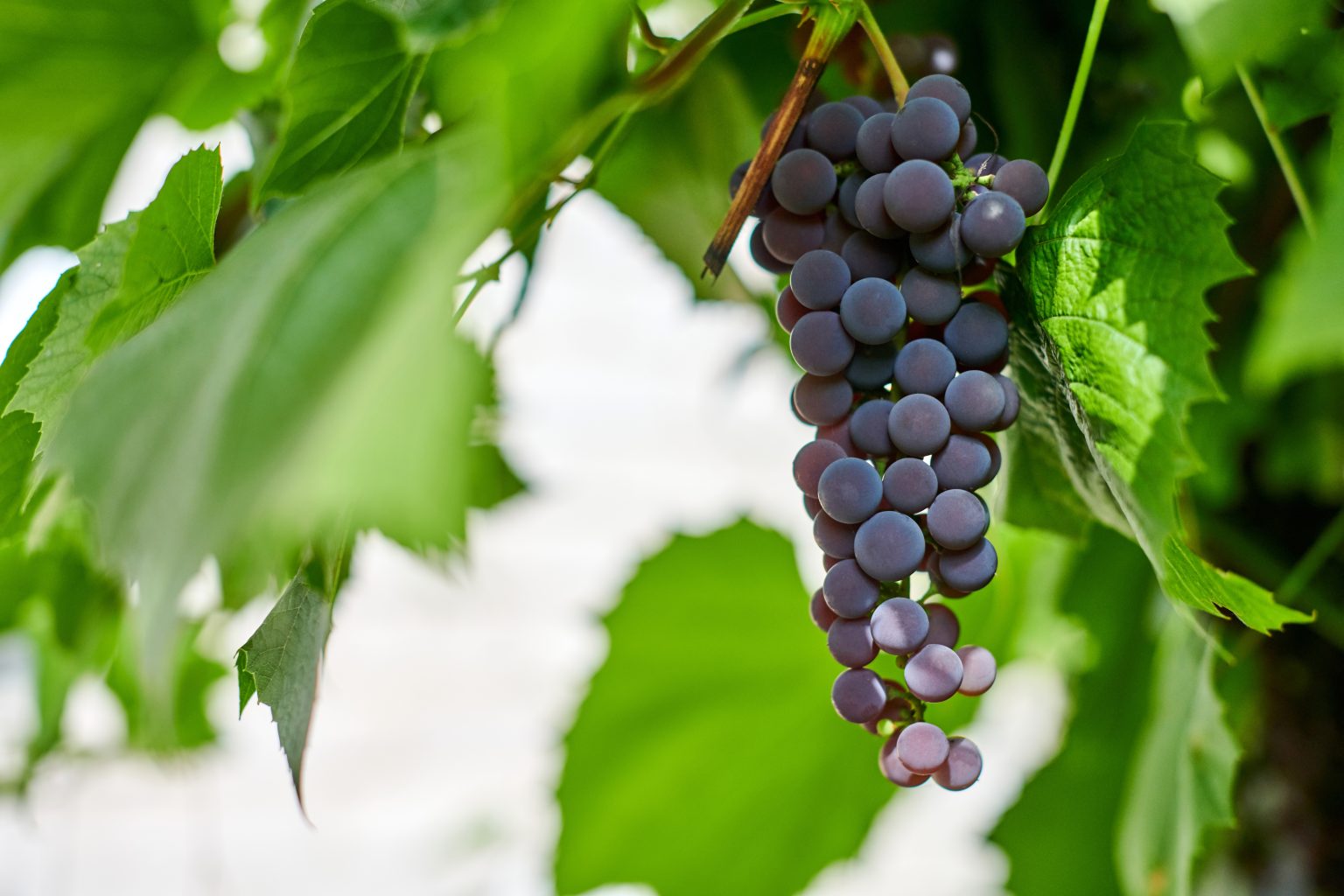

The 2025 harvest estimates indicate a significant recovery of last year’s losses: 4.1 million hectolitres, according to the figures published yesterday by the OIV – one million hectolitres more (+29%) than in 2024. While still below the 2023 record of 4.6 million hectolitres, the number is nonetheless 3% higher than the five-year average.
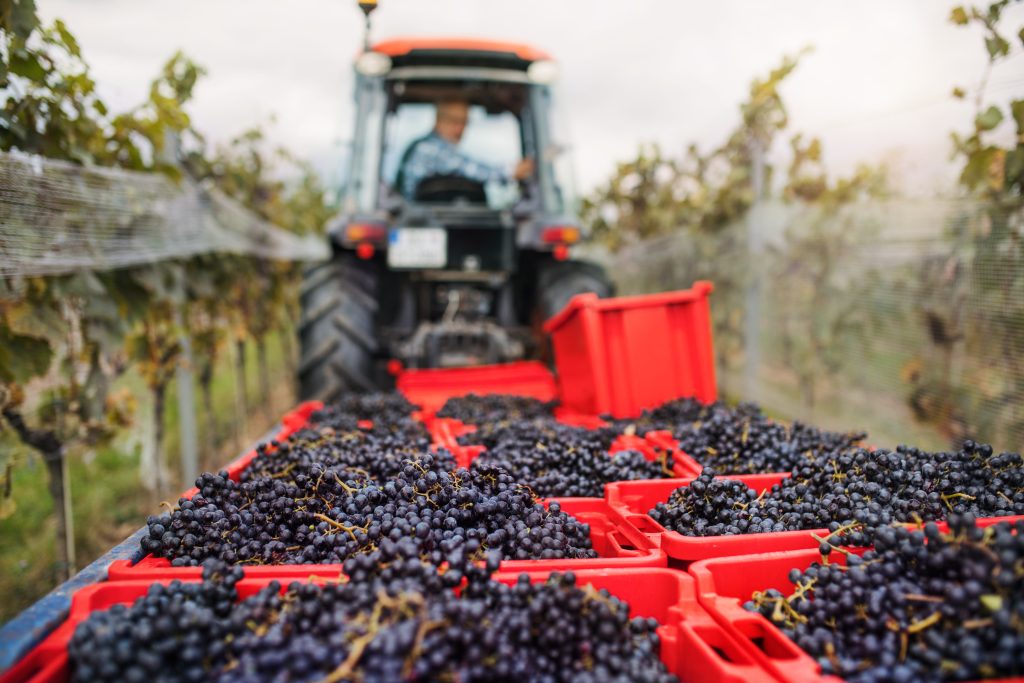
Autumn rains greatly helped vineyards in most regions, restoring balance to the musts, which reached sugar concentrations suitable for producing wines of 11.5–13.5% alc./vol., in line with the growing preference for lower alcohol levels. The large temperature differences between day and night – sometimes more than 10 degrees – during a long and mild autumn contributed to aromatic concentration. Unlike many recent years, we can say this time that both aromatic and sugar ripeness were achieved simultaneously in many parts of the country.
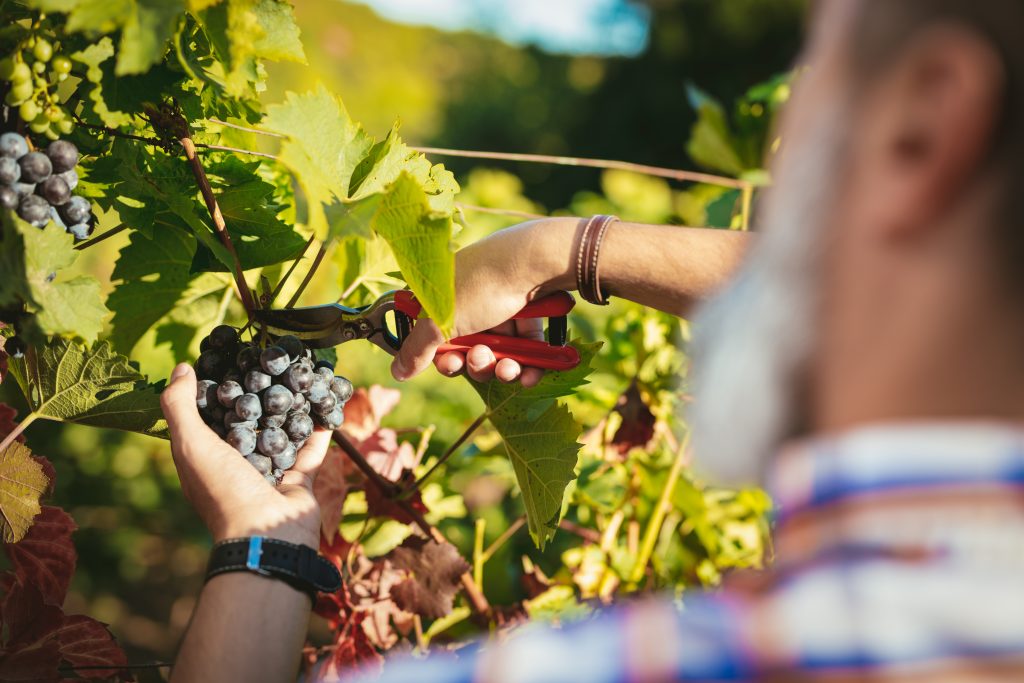
DOBROGEA
Domeniul Bogdan: a smaller harvest than in 2024
At Domeniul Bogdan in Murfatlar, as we mentioned at the beginning of the campaign, there were significant losses in early-flowering varieties, especially Sauvignon Blanc, due to two frost waves in April.
“We have a harvest 20% below that of 2024. The drought continued, soil stress has been established for 3–4 years now, so we expected smaller yields, beyond the organic farming practices that already imply lower production. On the other hand, we obtained exceptional quality for rosé and red wines – it will definitely be a benchmark year. Merlot, Pinot Noir and Syrah rosé, with Syrah being very spicy, as well as Fetească Neagră and Cabernet Sauvignon reds, and even the little Sauvignon Blanc we have left, all have the potential to be outstanding,” says Nicu Mateescu, oenologist at Domeniul Bogdan.
The Letea horses prance happily
“For Via Viticola Sarica Niculițel (Caii de la Letea / Letea Horses brand) and Crama Histria, we had a good year – perhaps the best of the recent ones,” says Alin Lăzărescu, CEO of Vintruvian Estates, which also owns Olterra Winery in Drăgășani and DeMatei in Dealu Mare (details about these in their respective regions).
“We had a production 30% higher than last year, with very good acidity levels. The base for sparkling wines is already excellent – we had a cooler autumn, with day–night temperature differences of 9 degrees or more. Irrigation also helped – covering 243 hectares, about half of our total area in Dobrogea – but it was also simply a very good year, with an exceptional autumn. Early signs show we will have a very good Aligoté, both still and sparkling, excellent rosés, and an outstanding Fetească Neagră,” Alin Lăzărescu told us.
MUNTENIA
Gramofon Wine: frost and exceptional quality
At Gramofon Wine, the April frost destroyed much of the Fetească Regală and also affected Fetească Neagră – the pride of the winery – but the year ended well, with the promise of exceptional wines.
“We lost a lot, but what remained is exceptional,” says Marcel Pascu, co-owner of Gramofon Wine. “The most significant losses were in Fetești – we were left with only 30–35% of the Fetească Regală – but this year’s wine has aromas I have never encountered before. For reds, however, it was an exceptional year – Fetească Neagră, Merlot, Cabernet Sauvignon, all are very good, while Chardonnay, after the first ten days of fermentation, already looked excellent. It was a much more balanced year overall – we had 15-degree differences between day and night, we had rainfall before harvesting, and, in general, better rains than last year,” adds Marcel Pascu.
An above-average year also for Crama DeMatei
In Zorești, at Crama DeMatei, an exceptional year is shaping up for red wines, with promising prospects already for next year.
“We had a fairly cool September and between August 28 and September 20 we had 60–65 litres of rainfall, which prevented excessive sugar accumulation, ensured a good balance with acidity, and led to excellent anthocyanin development… The harvest was 40% higher than in 2024, and the rains seem likely to continue into winter, which would mean a well-prepared soil profile for next year. Our vineyards sit on layers of clay that retain moisture but not excess water. Clearly, an above-average year – in fact, the best year for red wines since 2019,” said Alin Lăzărescu, CEO of Vintruvian Estates.
TRANSILVANIA
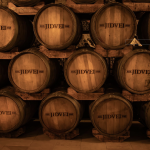
Jidvei, in perfect balance
As we reported earlier this year, the first summer rains reached Jidvei precisely when the vines were beginning to be at risk due to drought. Once that critical moment was overcome, the year unfolded excellently.
“We reached an average of 10 tonnes per hectare, with grapes harvested from 180 grams of sugar per litre up to 240–260, which brought everything into very good balance. The grapes were very healthy, with no issues of rot or split berries, and with good acidity – characteristic of this place,” said Ioan Mărginean, Jidvei’s viticulture director.
Climate changes are felt here as well, even in one of Romania’s most naturally protected viticultural areas. Vineyards are gradually being re-established using a higher training system (with grape clusters growing at a higher position on the vine), which comes with many advantages – from easier mechanical harvesting to lighter, more natural treatments and improved ventilation.
And although red wines from this region were a rarity 30–40 years ago, the recent success of the newly launched Pinot Noir range, together with this year’s excellent conditions, encouraged the winery to attempt its first red Cabernet Sauvignon. We hope to taste it soon.
MOLDOVA
Domeniile Averești: Harvesting in two stages
Domeniile Averești’s reputation has grown so much that much of this year’s Sauvignon Blanc and Riesling was pre-contracted even before the wines were ready. And those who placed their bets on this producer will be pleased – because the year turned out to be exceptional.
“In the first weeks we harvested the grapes for sparkling base wines – Pinot Noir, Chardonnay, Fetească Regală – then most of the white varieties. Rain stopped us for a week, after which we harvested a fully ripe Fetească Neagră at the perfect moment. Overall, it was an excellent year for Busuioacă, Zghihară, Sauvignon Blanc, Aligoté, and Fetească Regală, and we expect exceptional wines. In terms of yield, results are far above 2024, with many areas reaching 13 tonnes per hectare, compared to 8–9 tonnes last year, with very good acidity for balanced wines at 11.5–12.5% alcohol – exactly the style we aim to produce,” said Claudiu Crețu, production director at Domeniile Averești.
Beciul Domnesc: Hail and frost remain a cause for concern
2025 promises good wines in southern Moldavia as well, at Beciul Domnesc, but there are warning signs for the coming years – from persistent soil drought to the absence of anti-hail systems and subsidies for frost-prevention solutions.
“Again this year, we noticed that local varieties performed far better than international ones planted in the same viticultural areas. Galbena de Odobești, Feteasca Regală, Tămâioasa Românească, and Busuioaca de Bohotin will once again give us wines of exceptional quality. Likewise, our red wines will bring us great joy. Their aromatic concentration will generate pleasant surprises, especially in Fetească Neagră, Cabernet Sauvignon, and Syrah.
Overall, we can speak of a good agricultural year, but one in which the effects of dismantling the anti-hail system were strongly felt – especially in the Huși and Cotești vineyards. The absence of preventive measures is a major factor contributing to significant crop losses. Not only hail, but also frost produces effects not only in the current harvest year, but for the next 2–3 years. This is why a coordinated policy is needed for reinstalling anti-hail systems and granting subsidies for modern, effective frost-protection solutions.
The effects of soil drought are still noticeable even though our plantations benefited from a better-distributed rainfall regime this year compared to the previous one. However, this does not mean that the vines are free from hydric stress, especially in July and August. Correcting the soil’s water deficit requires at least one winter with consistent snow cover – and at this moment, such a winter does not seem likely,” warned Corina Nedelcu, Product Manager at Beciul Domnesc.
OLTENIA
Avincis: Vines fully recovered
Last year’s drought endangered the vines, but this year’s rains helped them recover fully at Avincis in Drăgășani.
“Production wasn’t much higher – perhaps 10–15% – but the great joy was to see that the vines are healthy and fully recovered after last year’s heat and drought. In 2025, May and June were quite wet, followed by dry July and August, but at the beginning of September we had showers – not large volumes, short-duration rains – so we had no complications from potential diseases. We split the harvest into stages to ensure a good balance between the must from earlier-picked grapes and the later ones, and the results are more than promising,” explained Valeriu Stoica, founder of Avincis.
Excellent year at Olterra
“Of the last four years, 2025 was definitely the best. It may even turn out to be the best of the last 15 years,” says a delighted Alin Lăzărescu, CEO of Vintruvian Estates, about the 2025 harvest at Olterra, the group’s newest acquisition.
“We achieved exactly the indicators we wanted in every aspect. Very good acidity, exceptional pH – especially for Crâmpoșia Selecționată, Fetească Albă, and Fetească Neagră. After August 20 we had 20–22 litres of rainfall per square metre, which revived and refreshed the vines so that at harvest we had neither dilution nor raisining. In addition, the grapes reached exceptional phenolic maturity, and sugar levels were exactly as we hoped – we can produce a Crâmpoșie under 12% alcohol and a Negru de Drăgășani under 14%.”
Wines of Romania: Conclusions
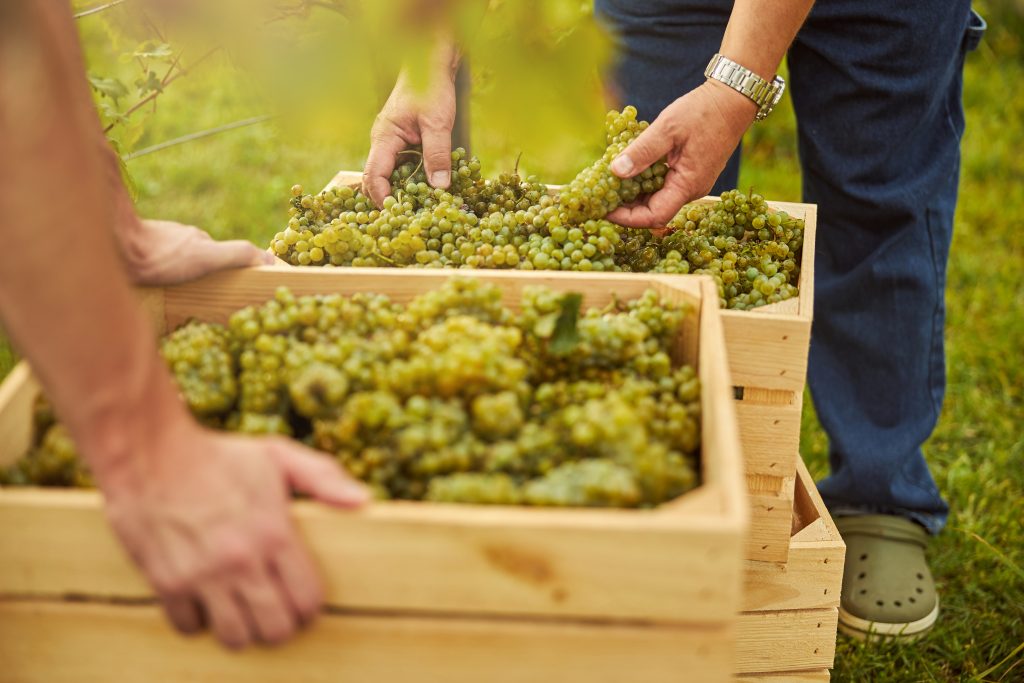
Beyond the information received from our partners – to whom we extend our thanks – there are several contextual insights and interpretations that must also be noted:
- There are regions in Romania that have suffered yet another year of drought, especially in southern Oltenia, and areas where late frosts affected the harvest to varying degrees. However, overall, for the industry as a whole, 2025 was a good year. It now remains for the wines themselves to confirm producers’ expectations over the coming years.
- A discussion has gained traction within the industry regarding the impact of anti-hail systems. Some producers – especially those affected by drought – claim that these systems not only combat hail, but may also contribute to the general lack of rainfall. Opinions are divided, and we will continue to monitor the topic.
- While global discussions focus on easing stock pressure – given that worldwide production remains at a very low level, only 3% higher than in 2024 – Romania’s nearly 30% higher harvest is not necessarily a positive sign, as many producers are still struggling with existing inventories.
- Differentiated communication of wine on the domestic market, as well as a unified and coherent export strategy among producers, are becoming imperative. Any delays risk leading to substantial losses.
- We have vineyards, we have wine, we have a class of consumers growing slowly but steadily, and the world is beginning to discover Romanian wine. We have even started investing in wine tourism – the missing piece needed to complete the foundation of a full ecosystem. Highways will still take some time, but traveling across the country is already faster and easier than it used to be. All that is missing now is a unified voice from the industry so that the fruits of two decades of investment, work, and passion can be enjoyed as they deserve.