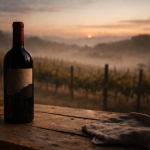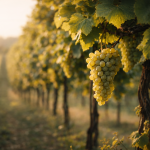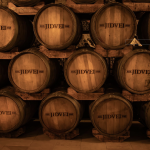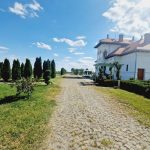

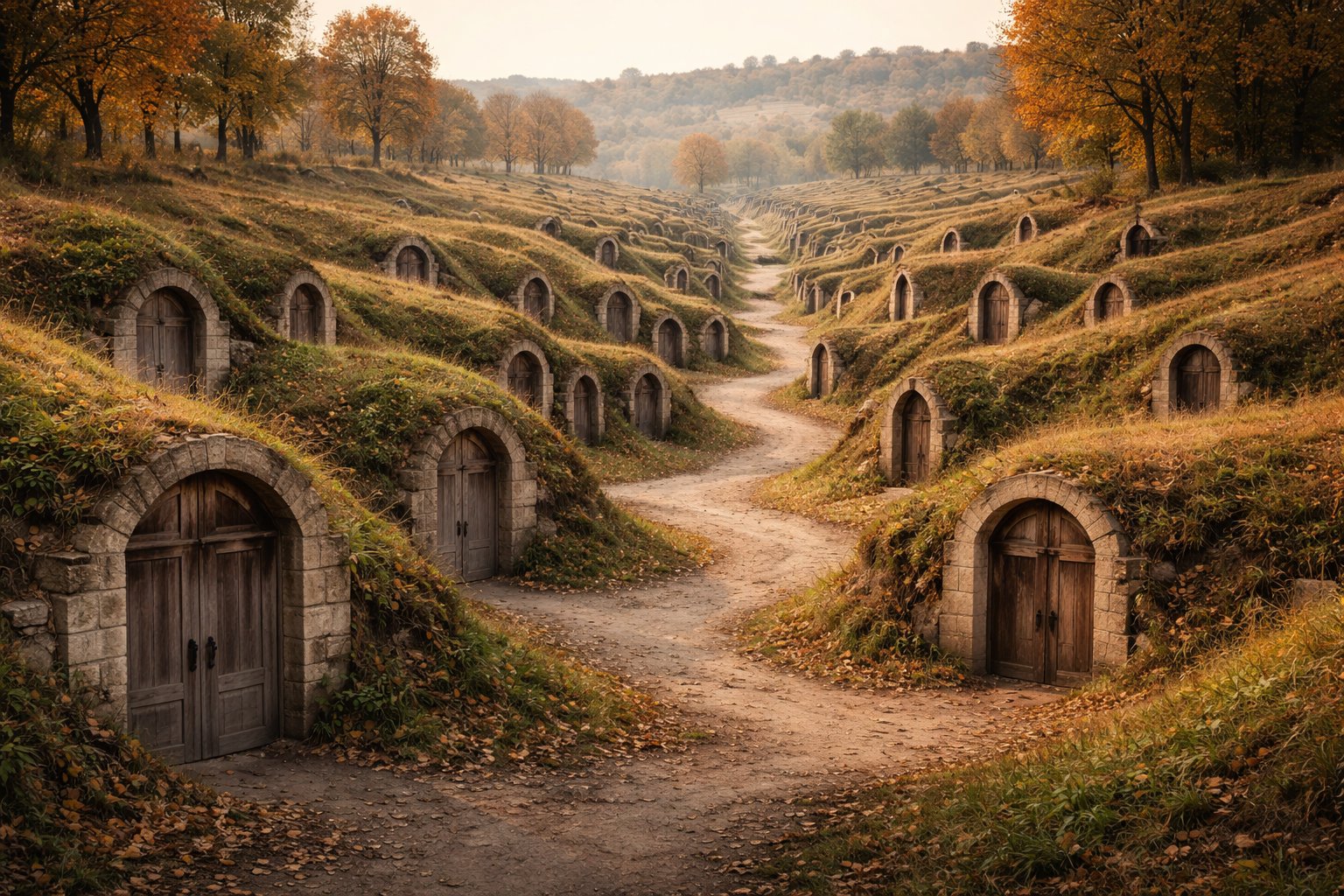

In Crișana and Maramureș, wine is not just agriculture or industry. It is memory built into the earth: cellars dug into hillsides, entire streets of heavy doors opening onto underground rooms carved from clay and rock. A ritual of preservation born from an old cultural reflex.
- History: from royal grants to international medals
- Early records and a tradition that begins before maps
- Miniș and Măderat: a wine region exporting before it had a “brand”
- Cellars, schools and organization: wine becomes an institution
- Terroir and boundaries: the map of Crișana-Maramureș wine region
- Designations of Origin and Geographical Indications
- Grapes and styles: what Crișana tastes like in the glass
- DOC Crișana – permitted varieties
- DOC Miniș – permitted varieties (still, sparkling and petillant wines)
- Geographical Indication Dealurile Crișanei – permitted varieties
- Geographical Indication Dealurile Sătmarului – permitted varieties
- Geographical Indication Dealurile Zarandului – permitted varieties
- Terroir in the Crișana and Maramureș Winegrowing Region (technical data)
- Crișana and Maramureș in numbers
- Cellars, villages and wine tourism
- Conclusion
- Sources:
A spectacular symbol of this identity is Sălacea, known as the “village of the 1,000 cellars” – a place where wine tradition becomes landscape. Here, nearly 970 cellars line up in a unique ensemble: a true underground architecture of wine, turning the idea of a “winery” into a culture of wine present in every household and in the life of the community.
One example says it all: every year, on May 25, the region celebrates Saint Urban, the protector of vineyards. If the vines have come through winter without frost damage, Saint Urban’s plaque is sprinkled with wine. If the vines have suffered, the plaque is struck. You can judge for yourself the role wine plays in a community that “beats” its saints – even symbolically – when the harvest has been harmed…
History: from royal grants to international medals
Early records and a tradition that begins before maps
Viticulture in western Romania is far older than the modern history of Romanian wine. In the Arad area, the existence of vineyards is attested by Bishop Gerard in his work Deliberatio, and in 1038 Queen Gizella of Hungary, with the king’s approval, donated eight vineyards located on Macra Hill (today Mocrea), along with an equal number of vine-growers. Later, in a donation by King Béla II from 1177 (reconfirmed in 1202) to the Arad provostry, 317 serfs are mentioned, of whom 164 were vine-growers – an unmistakable indication of the vine’s economic importance in the area.
Miniș and Măderat: a wine region exporting before it had a “brand”
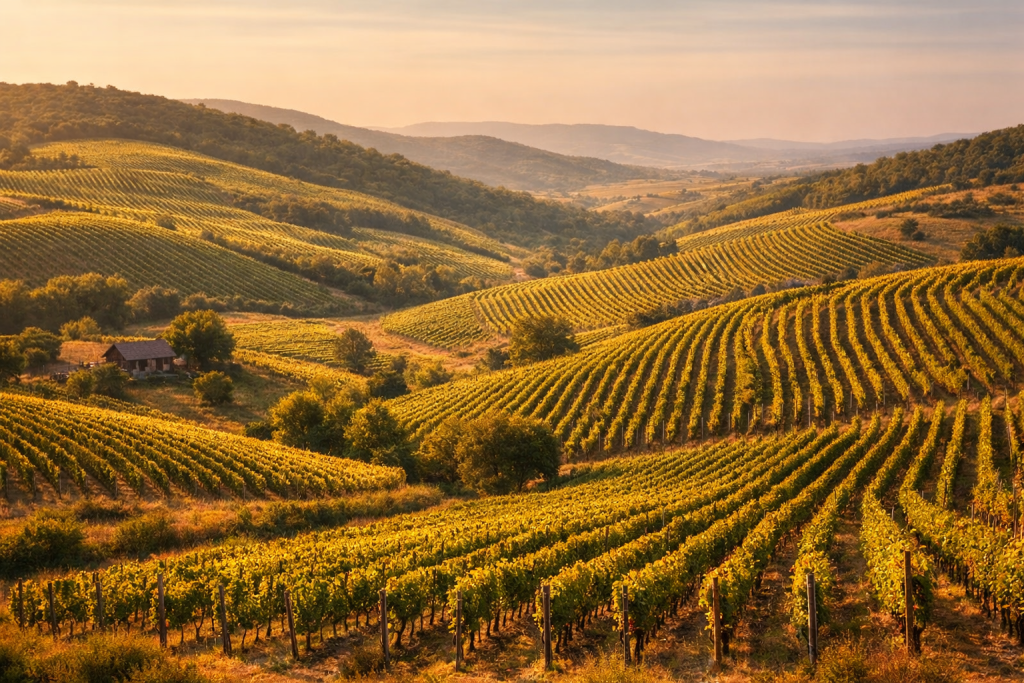
The Miniș–Măderat vineyard area appears repeatedly as both a historical and commercial landmark. The village of Miniș is mentioned on a viticultural map as early as 1212, and the scale of vine-growing becomes evident in the following centuries: in 1562, the tithe (the “tenth” of the harvest) reached 141,000 litres, while cultivated areas exceeded 700 hectares. In the 19th century, exports and trade took shape as a solid reality: Count Anton Grassalkovich was already exporting in 1745 to Bohemia, and Baron Dietrich of Pâncota was sending 4,000 vedre (vessels) of wine to Vienna in the fourth decade of the 19th century.
International prestige did not come by chance: in 1864, for the international wine competition in London, wines from 11 localities were selected, with those from Miniș and Măderat predominant – some dating back to 1785. At the world viticulture exhibition in Vienna in 1873, several wine samples received honorary medals, and a year later in London an aromatic wine from Păuliș won first prize. In 1885, producer Anton Țăranu from Ineu received the Grand Prize in Budapest with the Bacator variety, while the tradition of red grapes also has an early reference point: Cadarcă is said to have been produced for the first time in 1744, first in Miniș, then in Ghioroc, Păuliș, and Cuvin.
Cellars, schools and organization: wine becomes an institution
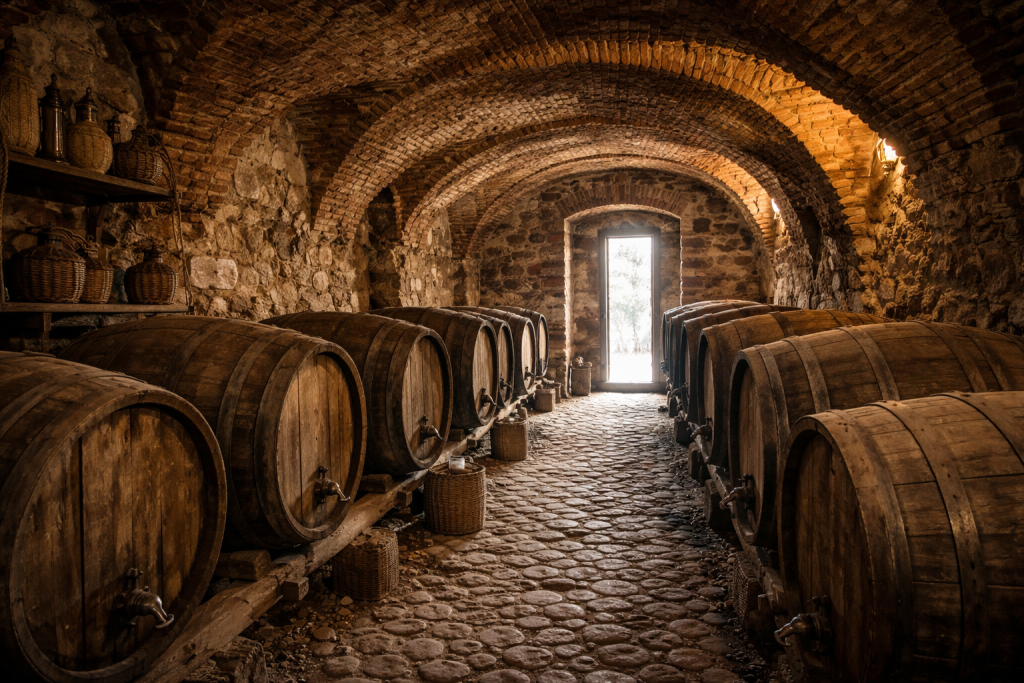
Behind these achievements stood an impressive infrastructure for its time. The cellar in Mocrea is dated to 1636, and in 1879 Count Anton Grassalkovich built in Miniș a cellar with a capacity of up to 4,000 hectolitres, of remarkable dimensions and brick vaulting – clear evidence that the region was not making wine only for local consumption.
At the same time, viticultural education emerged: in 1881 a three-year school of viticulture was founded in Miniș, and modern museography completes the story – 1988 saw the establishment of the Museum of Vine and Wine within the Miniș Vitivinicultural Research and Development Station (Ghioroc), part of the Arad Museum Complex.
In northern Crișana, wine remains deeply communal. In Diosig, the best-known street is “Padalja – Tessék-Sor” (“The ‘Please, come in’ Row – Under the Bench”), famous for its cellars and for the legend of tastings that ended “under the bench.” In the same area, the role of Count Zichy Ferenc is notable: he is considered one of the personalities who systematized viticulture and fruit growing in the 19th century, contributing to the recognition of wines from Diosig and its surroundings through presentations and competitions in cities such as Oradea, Debrecen, Vienna, Paris, and Berlin.
Terroir and boundaries: the map of Crișana-Maramureș wine region
The Crișana and Maramureș wine region stretches across north-western Romania and includes the counties of Satu Mare, Sălaj, Bihor and Arad (especially the areas north of the Mureș River).
Geographically, it is a transition region – between the Western Plain and the hills that rise toward the Apuseni Mountains – also defined by its distinctive hydrography, the three Criș rivers: Crișul Alb (The White Criș), Crișul Repede (The Fast Criș) and Crișul Negru (The Black Criș). The climate is temperate, and late-season temperature dynamics help preserve acidity and aromas, explaining an essential stylistic trait: in Crișana, wines often remain fresh, precise and well-balanced.
To the south, in Arad county, the region naturally extends into the hilly area of the Dealurile Zarandului (Zarand Hills), geographically and viticulturally connected to the Miniș–Măderat vineyard area. Hill foothills, southern exposures and skeletal soils rich in iron and microelements can support wines with structure, intensity and strong expression in reds.
Designations of Origin and Geographical Indications
To fully understand the Crișana-Maramureș region, it must be seen as a mosaic of complementary sub-regions. In this article, we use five main reference points:
- Designation of Controlled Origin (DOC) Crișana
- Designation of Controlled Origin (DOC) Miniș
- Geographical indication Dealurile Crișanei
- Geographical indication Dealurile Sătmarului
- Geographical indication Dealurile Zarandului
Together, they outline a region with a strong shared signature: natural acidity, freshness, and a recognizable elegance, complemented in the south by wines with structure and intensity, where the soils and warmer influences can lead to greater extract in the wines and, consequently, a higher ageing potential.
Grapes and styles: what Crișana tastes like in the glass
Crișana offers a wide palette of grape varieties, where international grapes meet Romanian ones, and a few local names become true signatures of place. An essential example is Mustoasa de Măderat, consistently present in the western areas and explicitly included even in the specifications for sparkling and pétillant wines in DOC Miniș.
DOC Crișana – permitted varieties
White varieties: Muscat Ottonel, Sauvignon, Traminer roz, Pinot gris, Fetească regală, Fetească albă, Riesling italian, Riesling de Rhin, Chardonnay, Mustoasă de Măderat, Furmint.
Black varieties: Cabernet Sauvignon, Merlot, Pinot noir, Fetească neagră, Burgund mare, Syrah, Cadarcă, Cabernet Franc.
DOC Miniș – permitted varieties (still, sparkling and petillant wines)
Still wines – white varieties: Muscat Ottonel, Traminer roz, Sauvignon, Pinot gris, Furmint, Fetească regală, Riesling italian, Riesling de Rhin, Mustoasă de Măderat, Chardonnay, Tămâioasă românească.
Still wines – black varieties: Cabernet Sauvignon, Cabernet Franc, Merlot, Pinot noir, Fetească neagră, Cadarcă, Burgund mare, Syrah, Novac.
DOC Miniș Sparkling – permitted varieties: Mustoasă de Măderat (soi principal), Chardonnay, Fetească regală, Pinot gris, Traminer roz; Pinot gris, Traminer roz, Pinot noir, Burgund mare, Cadarcă, Syrah, Fetească neagră.
DOC Miniș Petillant – permitted varieties: white: Mustoasă de Măderat, Sauvignon, Fetească regală, Riesling italian, Muscat Ottonel, Tămâioasă românească; rose: Pinot noir, Merlot, Burgund mare, Syrah, Cadarcă.
Geographical Indication Dealurile Crișanei – permitted varieties
White varieties: Muscat Ottonel, Sauvignon, Traminer roz, Pinot gris, Fetească regală, Fetească albă, Riesling italian, Riesling de Rhin, Chardonnay, Iordană, Mustoasă de Măderat, Furmint, Furmint de Miniș.
Aromatic varieties: Muscat Ottonel, Tămâioasă românească.
Black varieties: Cabernet Sauvignon, Merlot, Pinot noir, Fetească neagră, Burgund mare, Syrah.
Geographical Indication Dealurile Sătmarului – permitted varieties
White varieties: Muscat Ottonel, Sauvignon, Traminer roz, Pinot gris, Fetească regală, Fetească albă, Riesling italian, Riesling de Rhin, Chardonnay, Mustoasă de Măderat, Furmint, Iordană, Sortiment alb.
Black varieties: Cabernet Sauvignon, Merlot, Pinot noir, Fetească neagră, Burgund mare, Cadarcă, Syrah.
Geographical Indication Dealurile Zarandului – permitted varieties
White varieties: Muscat Ottonel, Sauvignon, Traminer roz, Pinot gris, Fetească regală, Fetească albă, Riesling italian, Riesling de Rhin, Chardonnay, Mustoasă de Măderat, Furmint, Furmint de Miniș, Sortiment alb.
Black varieties: Cabernet Sauvignon, Merlot, Pinot noir, Fetească neagră, Burgund mare, Cadarcă, Syrah, Novac, Portugais bleu, Sangiovese.
Terroir in the Crișana and Maramureș Winegrowing Region (technical data)
The Crișana and Maramureș wine region has a varied climate profile, which explains the diversity of styles – from very fresh, aromatic whites to more structured reds in warmer, sunnier areas.
Designation of Controlled Origin (DOC) Miniș
- Average annual temperature: 11.2 °C
- Annual rainfall: 644 mm
- Sunshine hours: approx. 1.490
Designation of Controlled Origin (DOC) Crișana
- Average annual temperature: 10.6 °C
- Annual rainfall: 636 mm
- Sunshine hours: approx. 1.519
Geographical indication Dealurile Crișanei
- Temperatura medie anuală: 8–10 °C
- Annual rainfall: 700–1.000 mm
- Sunshine hours: approx. 1.490
Geographical indication Dealurile Sătmarului
- Average annual temperature: 10+ °C
- Annual rainfall: 650–700 mm
- Sunshine hours: 2.000/year
Geographical indication Dealurile Zarandului
- Average annual temperature: 11.2 °C
- Annual rainfall: 644 mm
- Sunshine hours: 1.490
Crișana and Maramureș in numbers
According to data from the Vineyard Plantations Register (March 2022), the Crișana and Maramureș Wine Region has:
- Area under vine (noble varieties): 9.559,14 ha
- DOC Wines: 1,849.41 ha
- IG Wines: 1,001.64 ha
- Non-DOC/IG/varietal: 6,708.09 ha
This structure highlights an important point: Crișana has enormous potential not only through its established areas, but also through a large surface that can support future development – either toward stronger DOC/IG identities, or toward new projects built on terroir and modern interpretations.
Cellars, villages and wine tourism
Crișana is one of the few regions in Romania where wine can be “visited” as much as it can be tasted. Here, cellars are not merely technical spaces, but an extension of community life: places where wine is kept, compared, discussed, and passed on.
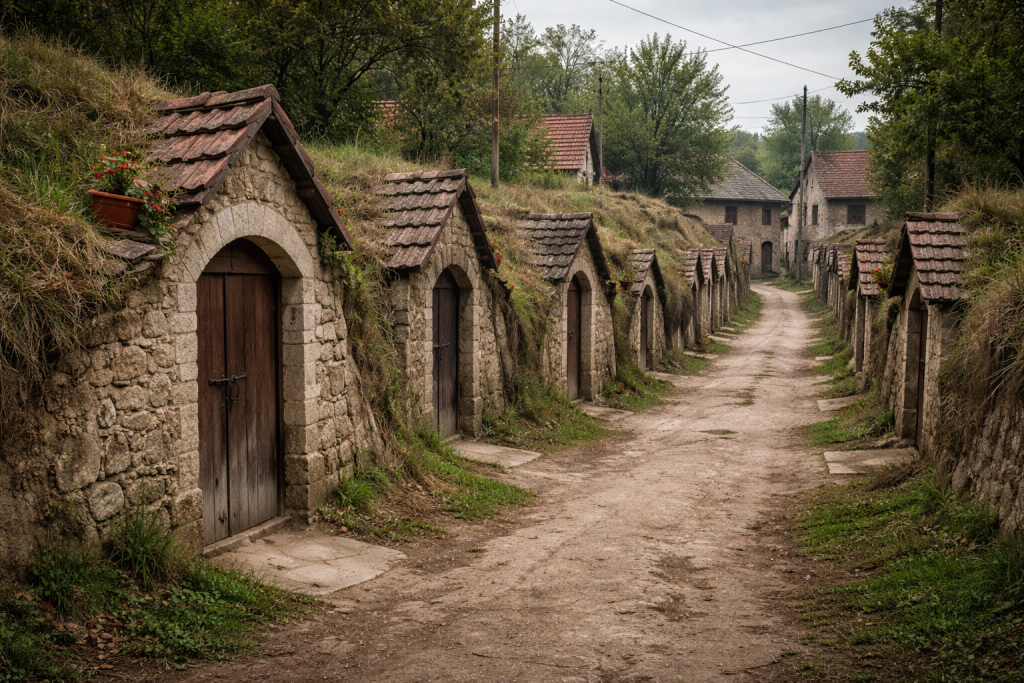
Sălacea and Diosig – where it is said that, in the old days, the largest cellar sheltered a barrel “of four railcars” – remain spectacular landmarks of this culture. And across Bihor and Arad, wine retains its vivid, communal character: from cellar streets and local traditions to a history of local and regional wine competitions.
Wine tourism offers in Crișana and Maramureș:
Balla Geza / Wine Princess (+lodging)
Pivnițele Birăuaș / Josef Wines
Fort Silvan (+lodging)
Crama Daiconi (+lodging)
Conclusion
The Crișana and Maramureș wine region is not a region of extremes, but of balance. Here, wine has freshness, energy and clarity – and its story is felt as much in the glass as in the landscape, in transitional climates, and in the heavy doors of cellars that keep time.
It is western Romanian wine at its most recognizable: discreet, precise, and memorable.
Sources:
Web
- Wines of Romania – „Crișana și Maramureș”: https://staging.winesofromania.com/crisana-si-maramures/
- Bihor în Imagini – „Sălacea, satul celor 1000 de pivnițe”: https://www.bihorinimagini.ro/de-vizitat/obiective-istorice/salacea-satul-celor-1000-de-pivnite/
- Printre Vinuri – „Cum arătau viile din Bihor în urmă cu 40 de ani”: https://printrevinuri.ro/2015/07/cum-aratau-viile-din-bihor-in-urma-cu-40-de-ani.html
- Adrian Apan: Contribuții privind vinurile și viile Văii Eriului în sec. XIX (III): https://share.google/0qNOQodzv18o2MTYc
Surse documentare (caiete de sarcini / date ONVPV)
- Book of Specifications – DOC Crișana
- Book of Specifications – DOC Miniș
- Book of Specifications – IG Dealurile Crișanei
- Book of Specifications – IG Dealurile Sătmarului
- Book of Specifications – IG Dealurile Zarandului
- Vine Plantations Registry