

Why do we find some wines everywhere in supermarkets, yet almost never in restaurants? And why do wines that shine in a wine bar sometimes seem invisible in retail?
- Retail vs. HoReCa: Two Completely Different Ways of Choosing Wine
- Who Decides Which Wines Get Selected in Retail and in HoReCa?
- How Wine Is Tested Before Being Listed (Retail vs. HoReCa)
- Testing in retail: wine must be clear, consistent and scalable
- Testing in HoReCa: wine must have a role and create experience
- Shelf Signage: Why Wine Sells Differently in Retail
- What Success Means in Retail vs. What Success Means in HoReCa
- Success in Retail: Consistency + Clarity + Shelf Availability
- Success in HoReCa: Exclusivity + Premium Character + Recommendation
- Common Mistakes in Retail (and Why the Wine “Doesn’t Move”)
- Common Mistakes in HoReCa (and Why the Wine Stays on the List but Doesn’t Sell)
- Conclusion: There’s No “Good Everywhere” Wine – Only the Right Wine for the Channel
The answer isn’t just about quality. Behind every bottle that ends up on a shelf or on a restaurant wine list, there is a selection process – sometimes highly pragmatic, other times closely tied to image, positioning, and experience.
Retail and HoReCa are not simply two sales channels. They are two different worlds, with different rules, different rhythms, and very different definitions of what success actually means.
Retail vs. HoReCa: Two Completely Different Ways of Choosing Wine
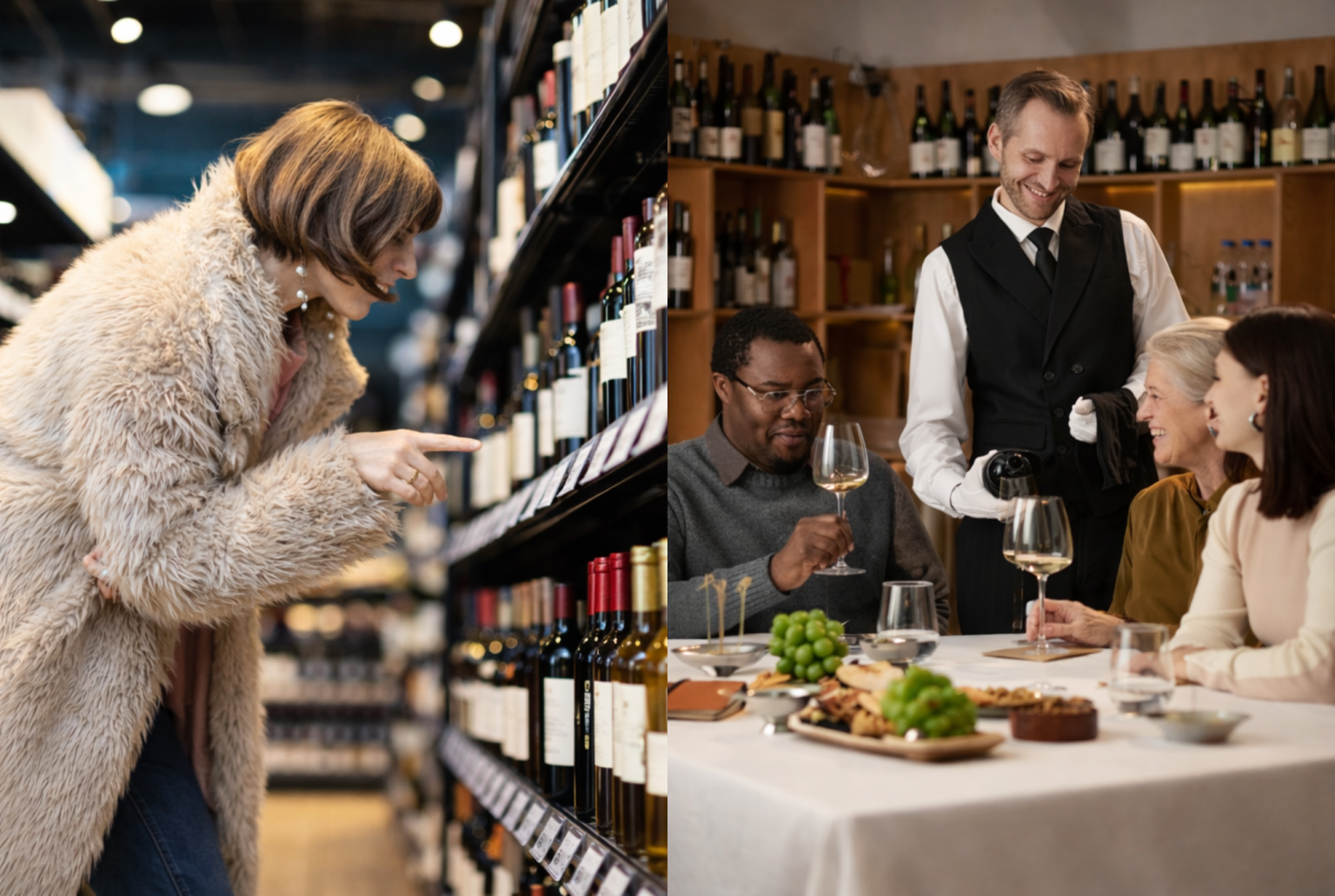
In retail, customers choose wine most often within a matter of seconds. They stand in front of the shelf, quickly glance at the price, the label, and a few visual cues, and then make a decision. Sommeliers are still rarely present at the shelf, and there is usually no gastronomic context. There is only the product – “alone” in front of the buyer.
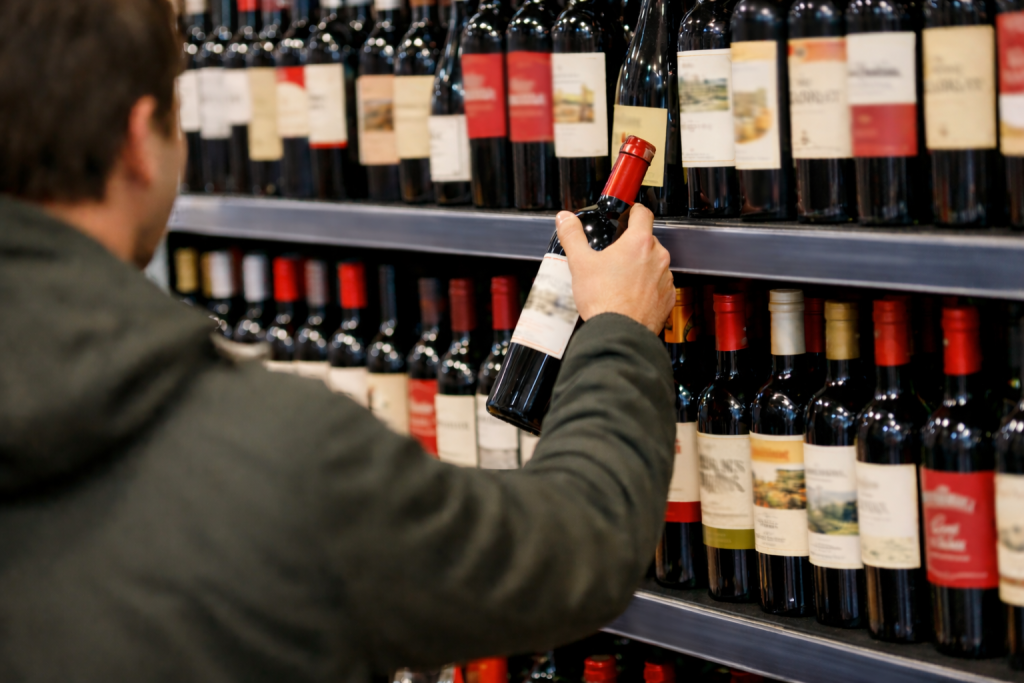
Some modern retail chains have understood that wine has “special” needs, and have shifted toward spaces that offer a more engaging experience and, most importantly, guidance – such as Carrefour’s Deschidem Vinul Românesc (We Open the Romanian Wine) program or the wine-dedicated areas inside Mega Image concept stores. Others try to build loyalty among specific customer segments through rotating offers or private-label wines.
What’s certain is that today’s retail environment no longer resembles what it was 10–15 years ago. When Davino decided in 2014 to withdraw all superpremium labels from retail, they weren’t abandoning the channel entirely – they were separating ranges, keeping labels like Iacob, Augustin, and Făurar, created specifically for retail. Today, even premium labels can be found in stores that offer good bottle storage conditions and the right context for presenting them.
In HoReCa, wine is part of an experience. It is selected in relation to the menu, the venue’s concept, customer expectations, and the image the restaurant wants to build.
In other words: in retail, wine has to sell itself, while in HoReCa wine is sold through recommendation and context.
Who Decides Which Wines Get Selected in Retail and in HoReCa?
In retail
Selection is usually made by the buyer/category manager (who has the final say on listings), together with purchasing teams, management and, sometimes, trade marketing/merchandising (especially when promotions and visibility matter).
The decision is made in an environment where product turnover, the ability to ensure consistent supply, margins, competitiveness within the segment, and the potential for promotions and campaigns are all crucial.
In HoReCa
Selection is made by the owner/manager, the sommelier or restaurant manager, and in some concepts also by the chef (especially where wine pairing plays a major role).
In practice, distributors also play an important role through offers and consultancy, especially for venues that build their wine list gradually.
In HoReCa, what matters most is list differentiation, food pairing, storytelling, premium perception, and how easily the wine can be recommended “at the table”.
How Wine Is Tested Before Being Listed (Retail vs. HoReCa)
Testing in retail: wine must be clear, consistent and scalable
In retail, tasting almost always comes with a pragmatic question: “Will it sell?”
A wine is usually assessed through quick tastings, alongside commercial criteria such as:
- fit within the price segment and direct competitors
- stylistic consistency (the same experience from one bottle to the next)
- ability to support volume, promotions, and re-listings
- stock stability and delivery reliability
In retail, a wine can be excellent, but if it is hard to position, hard to supply consistently, or difficult to “read” at a glance, its chances decrease.
Testing in HoReCa: wine must have a role and create experience
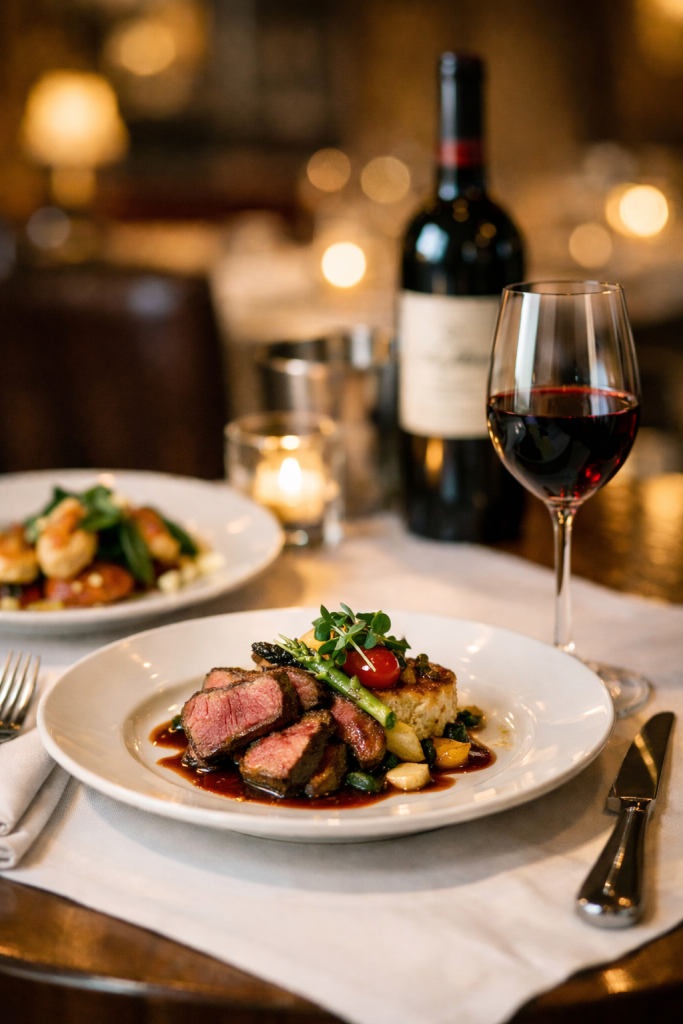
In HoReCa, testing happens “in context” and starts with questions like: “How does it match the menu?” or “What does it say about our venue?”
Key factors include:
- how it pairs with food
- how well it fits the venue’s concept
- whether the team can recommend it easily
- whether it has story and character
- whether it supports the positioning of the wine list
A very good wine that is hard to explain in simple terms risks staying “on the list”, without actually selling.
Shelf Signage: Why Wine Sells Differently in Retail
This is one of the most important differences between the two channels.
In retail, the buyer has little time and many options. There’s no one to help them, so wine needs “signals” that reduce hesitation and quickly confirm that the choice is a safe one.
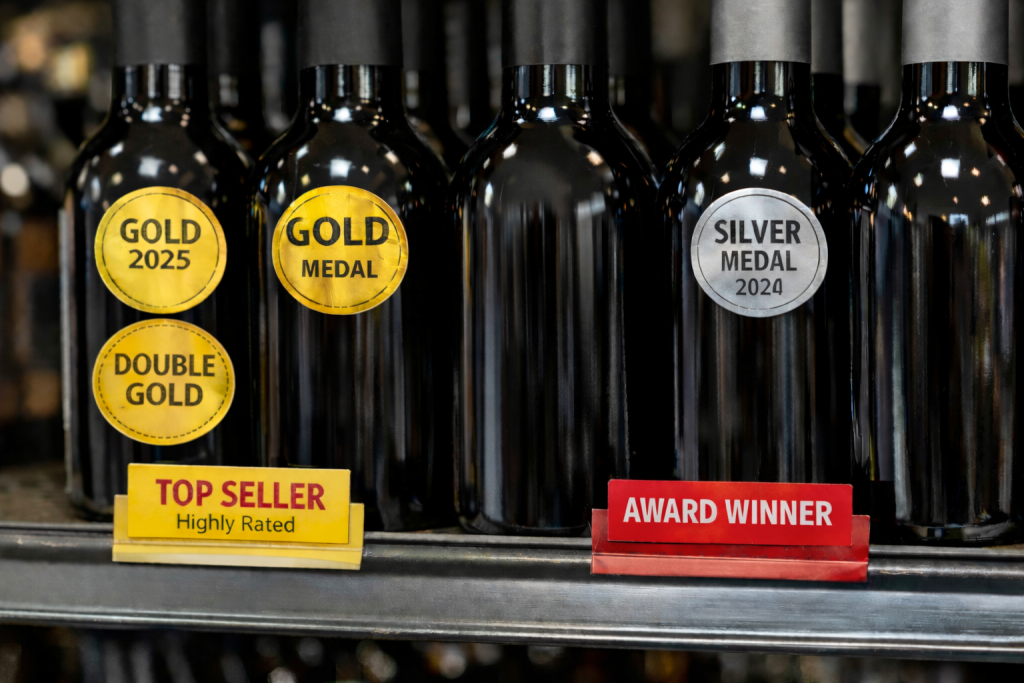
Shelf signage is not a detail. It is part of the product.
The Most Important Types of Retail Signage
1) Medals and awards
Gold or silver stickers are, for the general public, an immediate sign: “someone evaluated this wine and considered it good”.
Medals don’t just sell prestige – they sell instant trust.
2) Scores (90+ etc.)
Scores create the perception of standards and “objective” evaluation. Even if most consumers don’t actively follow wine critics, the number instantly communicates “above average”.
3) Shelf talkers / wobblers / shelf labels
Short, visible messages such as:
- “Recommendation of the week”
- “New”
- „Best Seller”
- „Best value”
- “Limited edition”
These catch the eye and offer a simple justification for the purchase.
4) Promotions and commercial mechanics
In retail, promotions are a major accelerator. Sometimes a wine gets listed – or stays listed – precisely because it can be supported through seasonal campaigns and volume.
5) Label clarity: grape variety, style, origin
“Dry Sauvignon Blanc”, “summer rosé”, “wine for pasta” – clear messages lower barriers and speed up the decision, especially when the buyer doesn’t have time to compare details.
6) Packaging as a quality signal
Bottle weight, closure type, and label design all shape perception before the first sip. In retail, “premium” often starts visually.
What Success Means in Retail vs. What Success Means in HoReCa
In retail, a wine succeeds when it delivers three things flawlessly: consistency, clarity, and availability. Consistency in quality – the same experience, every time. Clarity in message – so you understand at a glance what you’re buying. Availability – so you can find it when you look for it. On top of all that comes signage and “trust cues”: medals, scores, shelf presence, promotions, and small confidence anchors that reduce hesitation.
In HoReCa, a wine succeeds when it brings differentiation, a premium character, and a story. Not necessarily “premium” in price, but premium in perception: it feels like it belongs in a carefully curated selection. It supports the venue’s reputation and can be recommended with conviction. Sometimes even a high-volume wine can work in HoReCa – but only if it has a role, pairs perfectly with the menu, or is a smart by-the-glass choice.
Mistakes happen precisely when these rules get mixed up. A wine with a sophisticated story, a minimalist label, and small production lots can be wonderful in a wine bar, yet seem almost invisible on a supermarket shelf – where no one has time to decode it. At the same time, a wine that performs exceptionally well in retail, built correctly in terms of style, price, and shelf cues, can feel too “generic” for a restaurant trying to stand out and build a premium identity.
Success in Retail: Consistency + Clarity + Shelf Availability
Retail rewards wines that can become a habit – bottles that end up in the basket week after week because they feel safe and easy to choose.
Key attributes include:
- consistent quality (no surprises from one lot to the next)
- clarity (label, grape variety, style, segment)
- consistent shelf availability
- correct pricing within the category
- strong shelf cues (medals, scores, shelf presence, promotions)
- good turnover and scalability
Success in HoReCa: Exclusivity + Premium Character + Recommendation
HoReCa rewards wines that create experiences and differentiation – wines that say something about the venue and can be sold through people, not through shelves.
Key attributes include:
- premium character (perception + quality)
- exclusivity / uniqueness
- an easy-to-tell story
- fit with the menu
- training and support for the team
- healthy margin and realistic turnover
Common Mistakes in Retail (and Why the Wine “Doesn’t Move”)
In retail, a wine can fail without being bad. It fails because it can’t get past the barrier of fast, high-pressure choice. The most common mistakes are:
The most common mistakes are:
- a confusing label – too technical or hard to read
- lack of shelf cues (nothing that supports trust)
- a price “between segments” (it doesn’t feel accessible, but not premium either)
- inconsistency between lots or style (customers don’t repeat purchase)
- stock gaps / lack of continuity on the shelf
- a good wine, but with no clear reason to be chosen among dozens of similar options
Common Mistakes in HoReCa (and Why the Wine Stays on the List but Doesn’t Sell)
In HoReCa, wines fail more often because of missing context than because of missing quality.
The most common mistakes are:
- a wine list that’s too long, lacks logic, and is hard to navigate
- wines chosen for image only, without realistic turnover
- wines that are hard to explain – no “simple recommendation sentence”
- lack of training: the team doesn’t recommend, customers don’t discover
- lack of pairing: the wine has no clear role in the menu
- a selection that doesn’t support the venue’s concept (it feels generic)
A wine can be excellent, but if the staff doesn’t know it and doesn’t recommend it, it becomes invisible.
Conclusion: There’s No “Good Everywhere” Wine – Only the Right Wine for the Channel
Retail and HoReCa don’t compete; they operate differently.
A wine that wins in retail is usually one that offers confidence, clarity, consistency, and strong shelf cues. A wine that wins in HoReCa is usually one that differentiates, supports the venue’s image, and can be recommended easily in a gastronomic context.
That doesn’t mean a wine can’t succeed in both channels. It can – but it’s rarer than we think, and it requires careful balance: clear and stable enough for retail, interesting and persuasive enough for HoReCa. And when it happens, it’s not an accident. It’s the result of a strong strategy.
Beyond taste, the real difference is this: retail builds habits, HoReCa builds moments.